Alles über Drohnen-Lichtshows (Update 2026)
Wie Drohnenshows funktionieren, die Komponenten einer Show-Drohne, das Show-Design, Sicherheitstechnologie, Vorschriften, Kosten und die Rentabilität von Drohnenshows.
In diesem Leitfaden
Drohnen-Lichtshows haben sich in nur wenigen Jahren von einer Neuheit zum Mainstream entwickelt. Sie erleuchteten die Eröffnungsfeier der Olympischen Spiele in Paris, ersetzten bei vielen Feiern zum 250. Unabhängigkeitstag der USA das Feuerwerk, tourten mit Coldplay durch Stadien und stehen inzwischen im Mittelpunkt von allem – von privaten Feiern bis hin zu aufwendigen Werbespots. Was als Kuriosität begann, ist heute ein ernstzunehmendes Unterhaltungs- und Werbemedium – und die Technologie dahinter hat sich genauso schnell weiterentwickelt.
Wir haben die ursprüngliche Version dieses Artikels geschrieben, um zu erklären, wie Drohnenshows funktionieren und was Verge Aero auszeichnet. Seitdem hat sich viel verändert: KI-gestütztes Show-Design, Sicherheitssysteme der nächsten Generation und eine zunehmend ausgereifte Regulierungslandschaft. Hier ist der aktualisierte Leitfaden für 2026.
Wie funktionieren Drohnenshows?
Eine Drohnen-Lichtshow ist eine Flotte beleuchteter Drohnen, die eine vorprogrammierte, synchronisierte Choreografie fliegen – jede Drohne fungiert dabei wie ein einzelnes Pixel in einer riesigen 3D-Anzeige. Jede Drohne fliegt eine im Voraus berechnete, feste Flugbahn, die an die gesamte Flotte übertragen und nach Freigabe durch den Piloten automatisch ausgeführt wird.
Der Arbeitsablauf hat sich seit unserem ersten Beitrag zu diesem Thema grundsätzlich nicht verändert, ist aber deutlich schneller und zuverlässiger geworden.
Der Prozess zur Erstellung einer Show ist denkbar einfach:
- Das Design-Team erstellt eine Storyboard-Zeitleiste mit den gewünschten Bildern und Effekten.
- Die Looks werden in einer spezialisierten Software wie Verge Studio erstellt und animiert, die sie in synchronisierte, kollisionsfreie Flugbahnen für jede Drohne umsetzt.
- Das kreative Team prüft die realistische 3D-Vorschau der Show in der Software, um sicherzustellen, dass sie genau wie beabsichtigt aussieht.
- Die vollständige Show wird per Funksignal von einer durch einen Piloten bedienten Bodenkontrollstation an die Drohnen übertragen. Jede Drohne erhält ein individuelles Programm mit ihrer vorgesehenen Flugbahn.
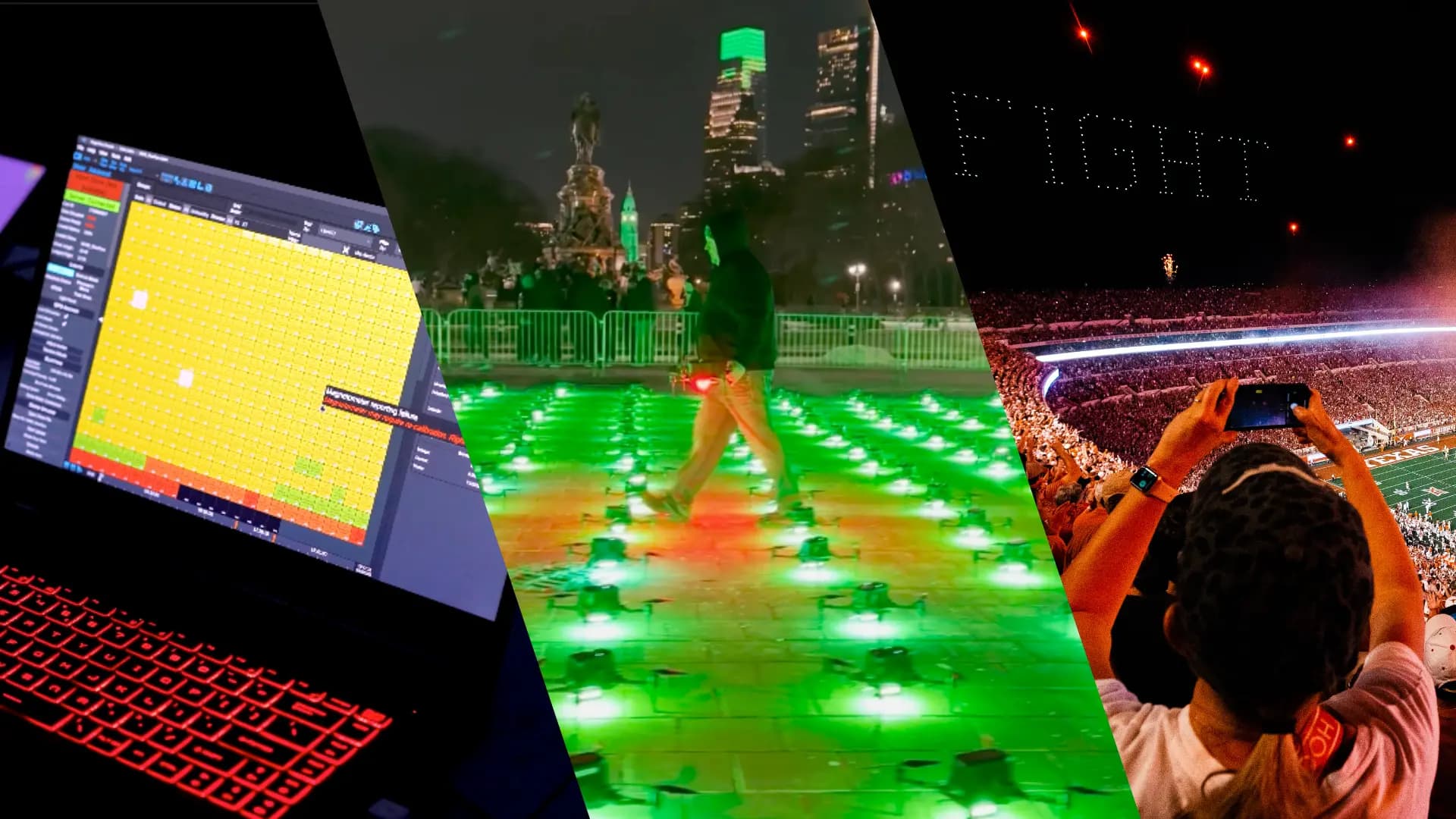
- An der Bodenkontrollstation nutzt der zertifizierte Pilot bzw. die Piloten ein detailliertes Dashboard, um die Drohnen für den Flug vorzubereiten und ihren Status kontinuierlich über ein lokales, verschlüsseltes Netzwerk zu überwachen, das die Kommunikation auch in stark ausgelasteten Funkumgebungen sicherstellt.
- Der Pilot bzw. die Piloten überwachen Wetter, Luftraum und den Zustand der Drohnen und arbeiten vor dem Start eine Checkliste ab. Sobald alles sicher und startklar ist, startet der Pilot die Show, und die Drohnen heben ab, um eine Geschichte in den Himmel zu zeichnen.
- Jede Drohne fliegt ihre vorab geplante Rückkehrroute zur eigenen Startposition und landet in einer gestaffelten Sequenz – mit derselben Kollisionsvermeidungsplanung, die sie während der Show von anderen Drohnen fernhielt.
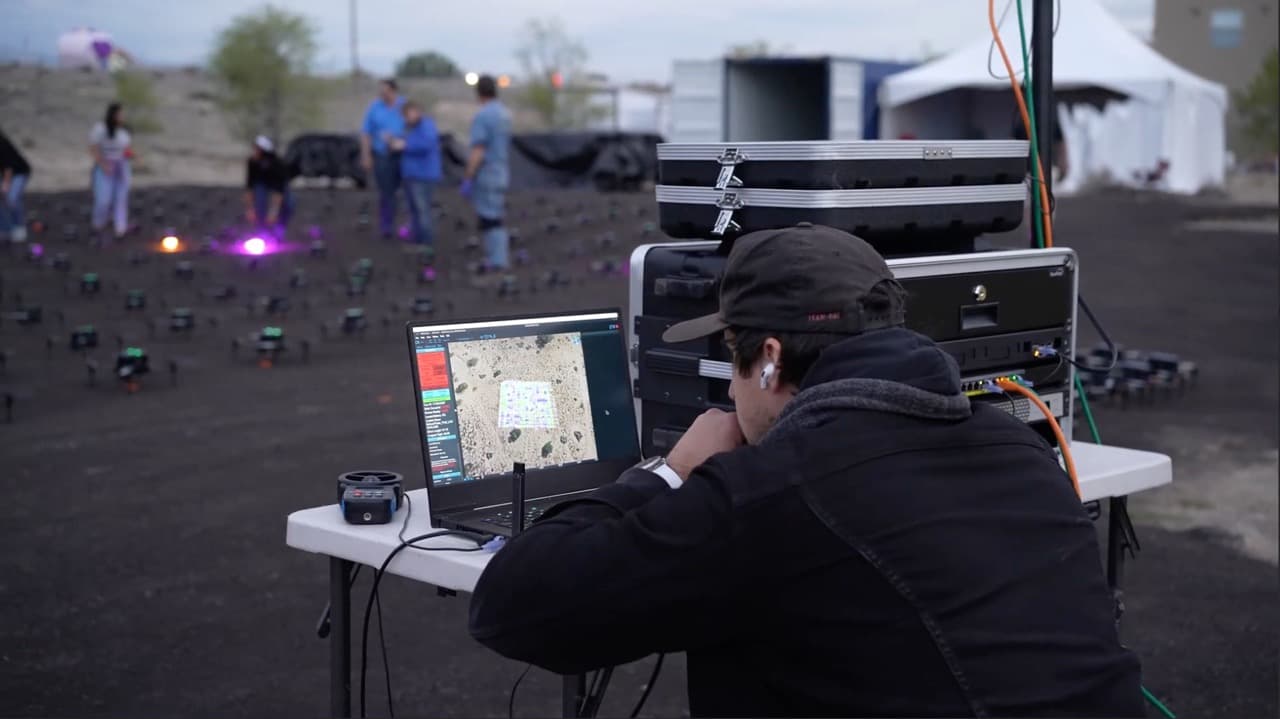
Ein Verge Aero-Pilot überwacht eine Drohnen-Lichtshow von der Bodenkontrollstation aus
Ein System zu entwickeln, das sicher und wiederholbar geflogen werden kann, erfordert eine Menge raffinierter Ingenieurskunst. Verge Aeros Plattform – Drohnen, Design-Software und Flugsteuerung – wird von unseren Ingenieuren speziell dafür entwickelt, sichere und beeindruckende Shows durchzuführen.
Welche Technologie steckt in einer Lichtshow-Drohne?
Eine Lichtshow-Drohne ist ein Fluggerät, das speziell für die Luftfahrt-Unterhaltung entwickelt wurde. Der Kern entspricht dem, was man für Präzisionsflüge erwarten würde: GPS/RTK-Positionierungshardware, Navigationssensoren (IMUs, ein Magnetometer und ein Barometer), ein Flugcontroller mit Begleitcomputer, redundante Funkgeräte und ein Akku. Der einzige Teil, der bei den meisten Consumer-Drohnen nicht Standard ist, ist die Nutzlast – statt einer Kamera mit Gimbal tragen Show-Drohnen wie die X7 von Verge Aero ein Bündel heller RGBW-LEDs, meist mehrere hochintensive Einheiten, die vollfarbiges, in Echtzeit gesteuertes Licht erzeugen können.
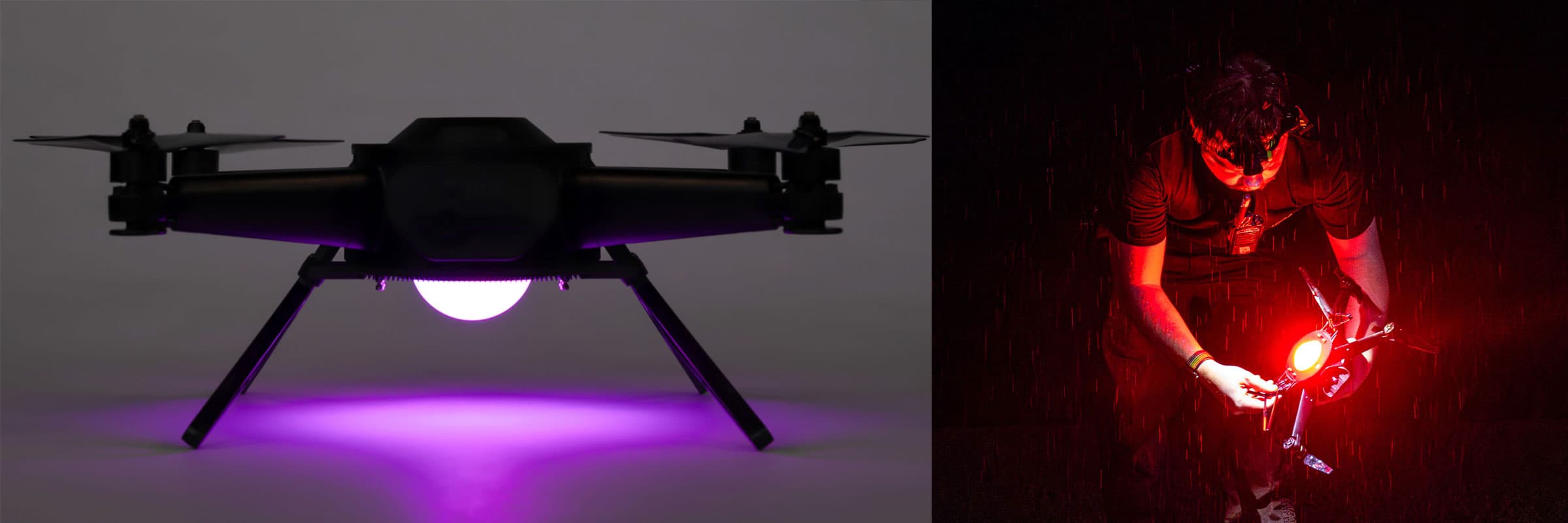
Die Verge Aero X7 Lichtshow-Drohne, speziell für die Luftfahrt-Unterhaltung entwickelt
Die eine übliche Ausnahme von der Regel „keine Nutzlast“ ist die Pyrotechnik: Manche Plattformen (darunter Verge Aeros X1) unterstützen Pyro-Drohnen, die ein kleines Zündmodul und Feuerwerkskörper tragen können, um pyrotechnische Effekte auszulösen.

Die Verge Aero X1 Pyro-Drohne, die pyrotechnische Effekte tragen kann
Wie werden Drohnenshows gestaltet?
Früher bedeutete Show-Design, die Bewegung jeder einzelnen Drohne händisch in einer universellen 3D-Software wie Blender zu animieren und dann manuell zu prüfen, dass sich keine zwei Flugbahnen jemals kreuzten – ein langsamer, fehleranfälliger Prozess.
Heute nutzen professionelle Drohnenbetreiber spezialisierte Software, um die Choreografie von Drohnenshows zu planen.
Design Studio von Verge Aero ist eine führende Software in der Drohnenshow-Branche. Sie bietet professionelle Animationswerkzeuge in einem zeitleistenbasierten Editor und übernimmt alle Antikollisionsberechnungen. Designer fügen Effekte hinzu und erstellen Elemente – frei Hand, durch den Import von Artwork aus einem 3D-Programm oder mit integrierten generativen Tools – während die Software automatisch Flugbahnkonflikte auflöst, sodass Drohnen nicht kollidieren können. Sie bietet sogar eine fotorealistische 3D-Vorvisualisierung, gerendert am tatsächlichen Veranstaltungsort, mit der Teams Kunden genau zeigen können, wie eine Performance aussehen wird, bevor eine einzige Drohne abhebt. Designs lassen sich in demselben Tool von 1 bis 10.000 Drohnen skalieren.
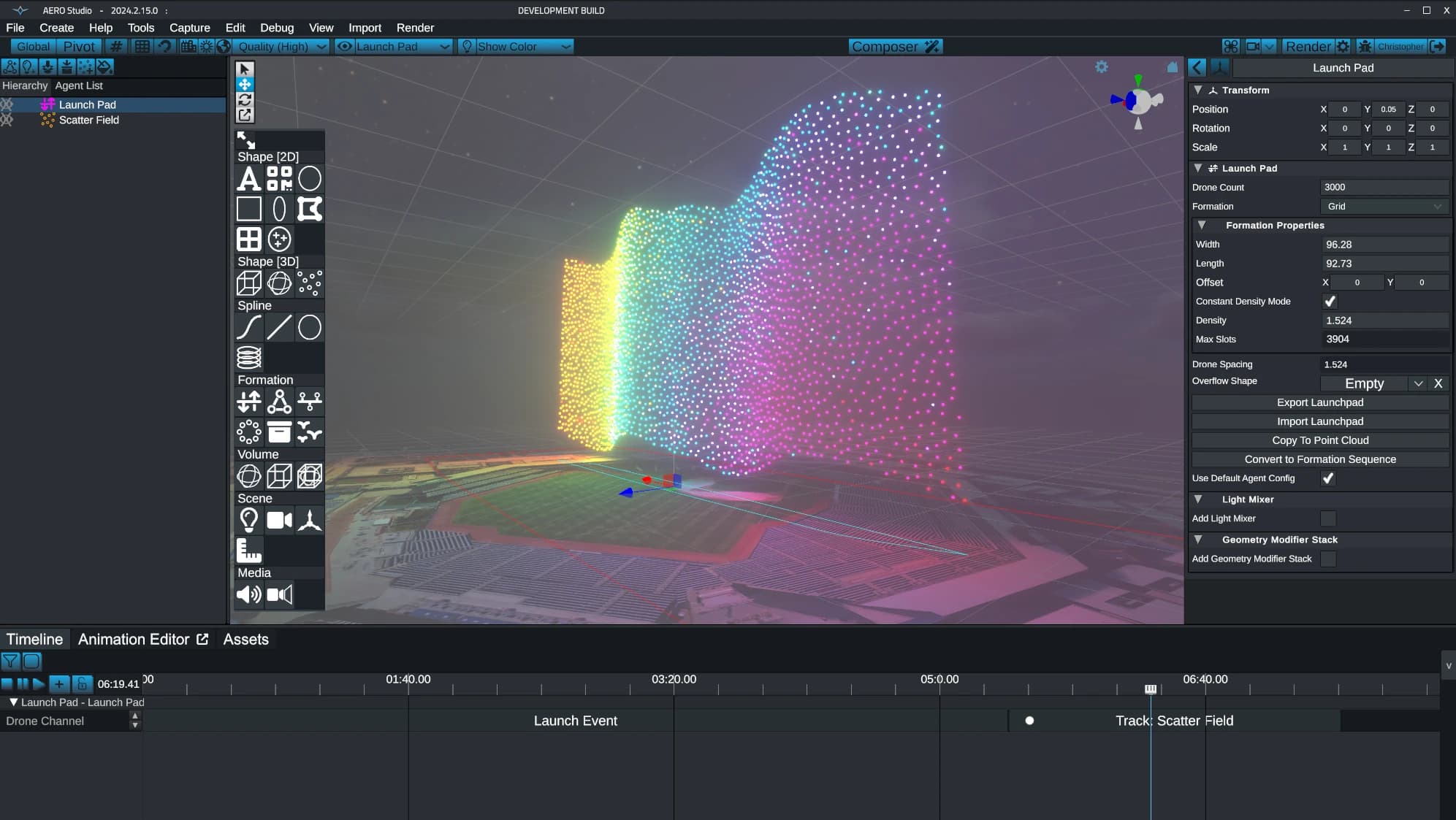
Screenshot der Verge Aero Drohnenshow-Software Design Studio
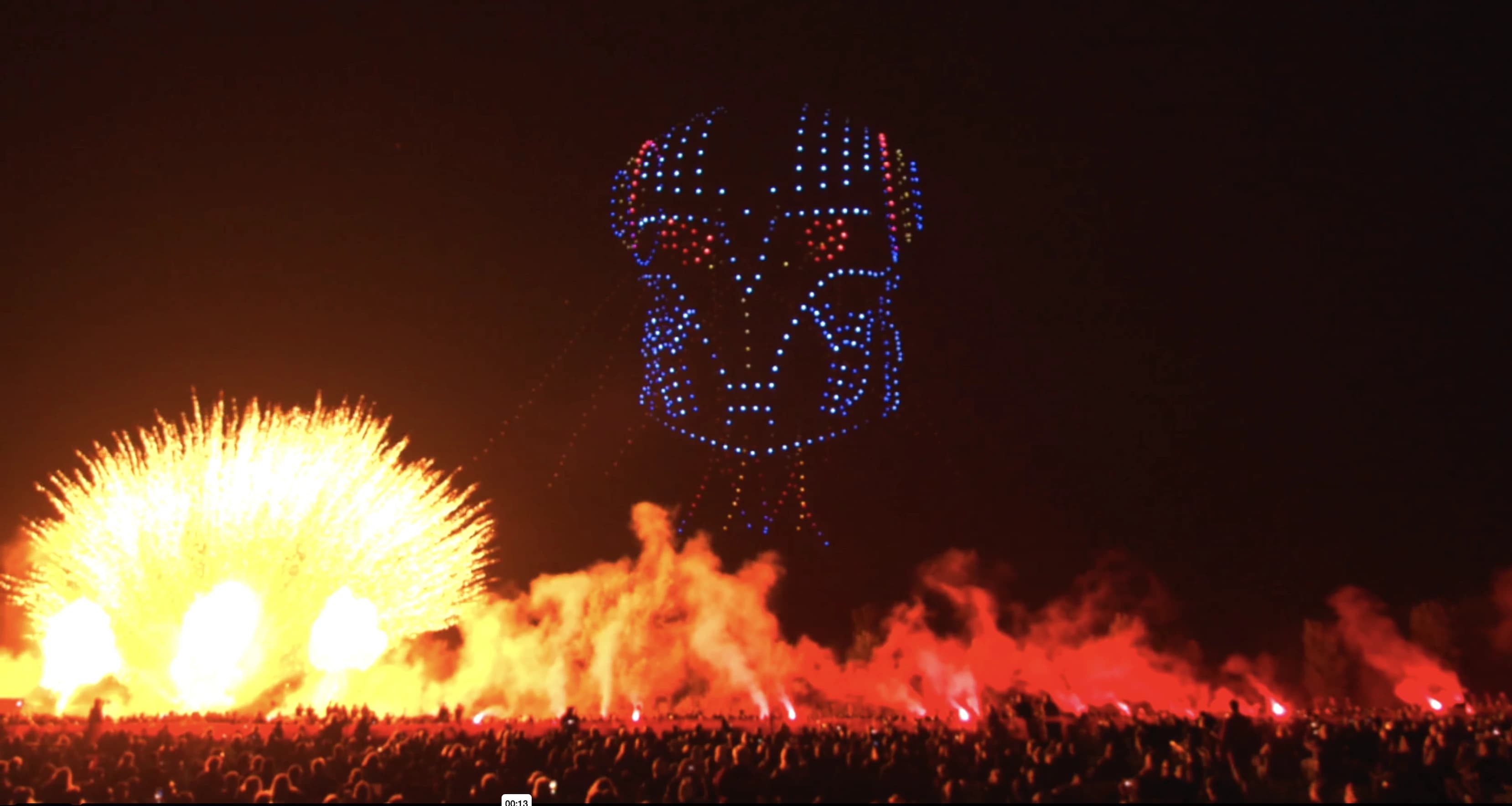
Die Einführung des KI-gestützten Designs, das Verge Aero den Best-of-Show-Titel auf der ISE 2026 einbrachte, markierte einen enormen Wandel im Designprozess. Designer können nun hyperrealistische Visuals aus einem Referenzbild generieren, statt solche Formationen von Hand aufbauen zu müssen. Kunden und kreative Teams können außerdem gemeinsam mit Verges KI-Tools am Storyboard einer Show arbeiten. Unser Ziel war stets, die Einstiegshürde für Designer zu senken: Junior-Teams können nun Arbeiten liefern, für die früher jahrelange Animationserfahrung nötig war, und sich stattdessen auf das Storytelling statt auf technische Fleißarbeit konzentrieren.

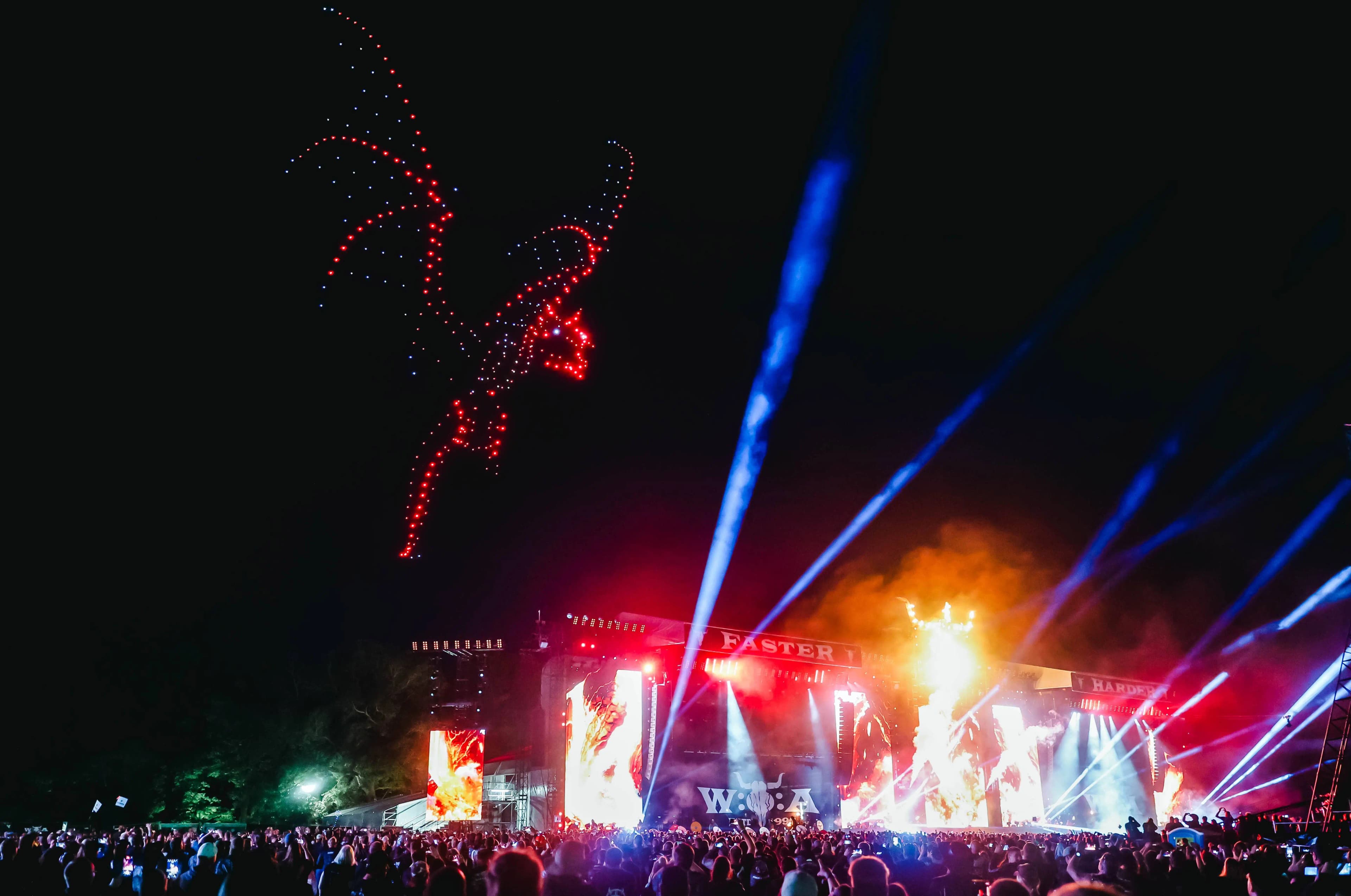
Das Formation-Graph-KI-Tool in Verge Aeros Studio wird genutzt, um fotorealistische Drohnenshow-Bildwelten einfach zu erstellen, wie hier dieser Hahn für das Albuquerque Balloon Fiesta.
Vorschriften und Genehmigungen
Drohnen-Lichtshows sind kommerzielle UAV-Betriebe mit spezifischen regulatorischen Anforderungen – die sich weltweit deutlich unterscheiden.

Verge Aero führt eine 250-Drohnen-Show für eine Stadtgeburtstagsfeier durch, genehmigt nach lokalen Luftraumvorschriften
USA (FAA)
Die Federal Aviation Administration (FAA) reguliert den gesamten Luftraum und alle kommerziellen Drohneneinsätze in den USA. Um eine Drohnenshow zu fliegen, benötigen Betreiber:
- Ein Part 107 Remote Pilot Certificate für den verantwortlichen Piloten.
- Eine §107.29-Ausnahmegenehmigung, die speziell erforderlich ist, weil Show-Drohnen nachts ohne die für Standard-Drohnen vorgeschriebenen Antikollisions-Blitzlichter fliegen (Blitzlichter würden den visuellen Effekt ruinieren).
- Eine §107.35-Ausnahmegenehmigung, da ein Pilot rechtlich mehrere Luftfahrzeuge gleichzeitig betreibt.
- Eine Luftfahrt-Haftpflichtversicherung sowie alle lokalen bzw. kommunalen Genehmigungen für Luftraum und Veranstaltungsort.
Europa (EASA)
Die European Union Aviation Safety Agency (EASA) legt den regulatorischen Rahmen für Drohneneinsätze in der gesamten EU fest, während die jeweiligen nationalen Luftfahrtbehörden (NAAs) die lokalen Genehmigungen erteilen:
- Die meisten Shows fallen unter die EASA-Kategorie „Specific“, für die entweder ein A2 Certificate of Competency (CofC) oder eine Genehmigung nach Specific Category Standard Scenario (STS) für den Piloten erforderlich ist, abhängig vom jeweiligen Einsatz.
- Größere oder nicht standardisierte Shows erfordern eine Specific Operations Risk Assessment (SORA) – 2026 auf Version 2.5 aktualisiert –, die zusammen mit einem Betriebshandbuch bei der zuständigen nationalen Luftfahrtbehörde (NAA) eingereicht wird.
- Die EASA-Vorschriften gelten einheitlich in allen 27 EU-Mitgliedstaaten sowie in Norwegen, Island und Liechtenstein, doch die einzelnen Länder legen weiterhin eigene Genehmigungs- und Luftraumanforderungen fest, sodass die Bearbeitungszeiten je Land variieren.
- Auch die Drohnen-Hardware selbst spielt hier eine Rolle: Die DVR-Zertifizierung der EASA ist eine formale Konstruktionszulassung, die manche Hersteller (darunter Verge Aero) besitzen und andere nicht.
Kanada
Transport Canada (TC) reguliert Drohneneinsätze landesweit, wobei NAV CANADA den Zugang zum kontrollierten Luftraum koordiniert:
- Eine Advanced-Operations-Zertifizierung ist für Nachtflüge und jeden Flug innerhalb von 30 Metern zu Umstehenden erforderlich.
- Seit April 2025 ist speziell für das Fliegen von Drohnen bei angekündigten öffentlichen Veranstaltungen – worunter die meisten Drohnenshows fallen – ein Special Flight Operations Certificate (SFOC) erforderlich.
- Betreiber benötigen ein Pilot Certificate — Small Remote Aircraft Operations (Advanced Operations) sowie eine Haftpflichtversicherung, die die Mindestdeckungsanforderungen von TC erfüllt.
Südamerika
Brasiliens National Civil Aviation Agency (ANAC) ist der etablierteste Regulierer für Drohnenshows in der Region, und die meisten anderen südamerikanischen Länder folgen unter ihrer jeweiligen nationalen Luftfahrtbehörde (etwa Kolumbiens Aerocivil) einem weitgehend ähnlichen Modell:
- ANAC (gemäß RBAC-E Nr. 94) verlangt für kommerzielle Einsätze eine Flottenregistrierung, eine Haftpflichtversicherung und ein Operator Certificate.
- Die meisten anderen nationalen Zivilluftfahrtbehörden in der Region verlangen eine vergleichbare Kombination aus Registrierung und kommerziellem Zertifikat, wobei die konkrete Dokumentation und die Prüfzeiten je Land variieren.
- Einfuhrzölle und die Zollabwicklung für Drohnenausrüstung können erhebliche Vorlaufzeit erfordern – Versand und Grenzlogistik sollten Monate vor dem Showtermin geplant werden.
Afrika
Südafrikas Civil Aviation Authority (SACAA) ist der etablierteste Regulierer für Drohnenshows auf dem Kontinent, wobei die Anforderungen von Land zu Land stark variieren:
- Die SACAA behandelt Drohnenshows als kommerzielle Einsätze und verlangt ein Remote Operator Certificate (ROC) sowie eine gültige Remote Pilot Licence (RPL).
- Eine separate Nachtflug-Genehmigung ist erforderlich, da Standardgenehmigungen nur Tagflüge abdecken.
- Viele andere afrikanische Länder haben nur eingeschränkte oder noch im Aufbau befindliche Drohnenvorschriften – Betreiber sollten die aktuellen Anforderungen direkt bei der zuständigen nationalen Zivilluftfahrtbehörde bestätigen, bevor sie eine Show buchen.
Ozeanien
Australiens Civil Aviation Safety Authority (CASA) reguliert den Großteil der Drohnenshow-Aktivitäten in der Region, während Neuseelands Civil Aviation Authority (CAA NZ) den Betrieb dort regelt:
- Die CASA verlangt ein genehmigtes Remote Operator's Certificate (ReOC), eine schriftliche Risikobewertung sowie beleuchtete Start- und Landebereiche.
- Für die öffentliche Veranstaltung selbst sind separate Genehmigungen der lokalen Behörden erforderlich, und sowohl Nachtflüge als auch Mehrdrohnen-Einsätze benötigen jeweils eine spezielle schriftliche Genehmigung über die Standardregeln hinaus.
- In Neuseeland erfordern vergleichbare Nacht- und Mehrdrohnen-Shows die Part-102-Zertifizierung unter der CAA NZ.
Sich durch diesen Flickenteppich aus Ausnahmegenehmigungen, Zertifikaten und Befreiungen zu navigieren, gehört zu den am wenigsten glamourösen Teilen eines Drohnenshow-Geschäfts – und zu den Bereichen, in denen am leichtesten Fehler passieren. Verge Aero bietet regulatorische Unterstützung für Systembetreiber in jeder Region, in der es tätig ist, und hilft ihnen, FAA-Ausnahmegenehmigungen, EASA-Befreiungen und Pyro-Drohnen-Genehmigungen rechtzeitig vor dem Showtermin zu klären.
Was kosten Drohnenshows?
Die Kosten einer Show hängen stark vom Markt der jeweiligen Region, der Art der Veranstaltung, der Show-Komplexität, der Drohnenanzahl und weiteren logistischen Faktoren ab – es gibt keinen einzigen, universellen Preis. Stand 2026 gelten grob folgende Preisklassen:
- Kleine Shows (etwa 100–150 Drohnen): 15.000–25.000 $.
- Mittelgroße Shows (200–300 Drohnen): 40.000–70.000 $.
- Große Produktionen (500+ Drohnen): ab 100.000 $.
Hinweis
Diese Angaben sind Durchschnittswerte nach bestem Wissen. Die tatsächlichen Show-Kosten variieren je nach einer Reihe von Faktoren, unter anderem dem Markt der Region, in der die Show stattfindet.
Die Kosten pro Drohne sinken tendenziell mit wachsender Flottengröße, da feste Kosten wie Design, Reisen und Genehmigungen auf mehr Fluggeräte verteilt werden.

Ein Zuschauer filmt eine Drohnenshow bei einer Pep-Rally im Rahmen eines Footballspiels
Wie profitabel ist ein Drohnenshow-Geschäft?
Drohnenshows sind nicht nur ein Spektakel – sie sind zu einer echten Geschäftsmöglichkeit geworden, und zu einer der wenigen im Live-Entertainment mit echten Margen. Daten von Verge-Aero-Partnern zeigen typische Gewinnmargen von rund 60–65 %, wobei die meisten Betreiber schon im ersten Jahr einen positiven ROI erreichen.
Geschäftschancen im Drohnenshow-Bereich
Viele erfolgreiche Betreiber kommen aus verwandten Branchen: Feuerwerksfirmen, Eventproduktions- und AV-Unternehmen sowie Freizeitparks passen alle gut, da sie bereits Kundenbeziehungen und Erfahrung mit Genehmigungen haben. Der Markt ist weltweit noch relativ unterversorgt, was mit erklärt, warum die Margen trotz wachsender Nachfrage stabil bleiben.
In unserem Leitfaden zum Aufbau eines Drohnenshow-Geschäfts finden Sie einen Überblick über diesen Weg.
Was kostet eine Flotte für Drohnenshows?
Der Einstieg erfordert nennenswertes Kapital – typischerweise ab 75.000 $ für eine Einstiegsflotte, Software-Lizenzen und Bodenstations-Hardware – zuzüglich eines zertifizierten Piloten und visueller Beobachter. Große Einsätze mit 500+ Drohnen können eine Investition von 500.000 $ oder mehr erfordern.
Der Einstieg in fliegende Drohnenshows erfordert mehr als nur die Drohnen selbst – es braucht Flugsteuerungsausrüstung, Design-Software und zusätzliche Hardware. Das Zusammenstellen von Komponenten verschiedener Anbieter kann eine nahtlose Integration nicht immer garantieren. Verge Aero garantiert die vertikale Integration der gesamten Plattform – Drohnen, Hardware und Software – sowie ein vollständiges Onboarding des Systems, regulatorische Beratung, laufende Schulungen, Möglichkeiten innerhalb des Netzwerks und dauerhaften Support für Systemnutzer.
Sind Drohnenshows sicher?
Die kurze Antwort lautet: ja. Wenn sie von einem professionellen Betreiber unter Einhaltung wesentlicher Sicherheitsprotokolle mit einem sachgerecht entwickelten System geflogen werden, sind Drohnenshows für Zuschauer und Veranstaltungsorte sicher.
Sicherheit bei Drohnenshows: Von Grund auf entwickelt
Risikomanagement ist in den letzten zwei Jahren zu einem der größten Anliegen der Branche geworden. Eine Show im Dezember 2024 in Orlando, bei der Drohnen mitten im Flug kollidierten und einige den Luftraum der Show verließen, wobei ein Zuschauer verletzt wurde, sowie eine Show im Mai 2026 über dem Vivid Festival in Sydney, bei der rund 89 Drohnen aus der Formation fielen und in den Hafen stürzten, erregten beide erhebliche öffentliche Aufmerksamkeit. Die Branche hat diese Vorfälle weniger als isolierte Fehlschläge, sondern als Wendepunkte behandelt – Momente, die die Sicherheit in den Mittelpunkt der öffentlichen Debatte rückten und für Betreiber überall zu Lehrbeispielen dafür wurden, wie viel technische Disziplin Drohnenshows erfordern.
Verge Aeros Sicherheitsansatz geht beiden Vorfällen voraus. Als vertikal integriertes System – intern entwickelt, von der Drohnen-Hardware über die Flugsoftware bis zur Bodenkontrollstation, statt aus Komponenten von Drittanbietern zusammengesetzt – wendet Verge Aero von Beginn an luftfahrttechnische Best Practices an. Das läuft auf fünf wesentliche Punkte hinaus: Navigationsredundanz (mehrere Positionsschätzer, sodass der Ausfall eines einzelnen Sensors nie katastrophal ist), einheitliche und aktuelle Flugsoftware, unabhängiges mehrschichtiges Geofencing, redundante Langstreckenkommunikation, die sich nicht allein auf WLAN verlässt, sowie strenges Pilotentraining und Sicherheitsmanagement.
Aktuelle Fortschritte bei der Sicherheit von Drohnenshows
- Geofencing: Ein großer branchenweiter Schwerpunkt lag auf der Verbesserung von Geofencing-Systemen über die üblichen harten und weichen Grenzen hinaus, die zwar den Show-Luftraum abdecken, aber die individuelle Position oder Flugbahn einzelner Drohnen nicht berücksichtigen. Insbesondere hat Verge Aero mit dynamischem und prädiktivem Trajektorien-Geofencing für sein Drohnenshow-System Pionierarbeit geleistet, lange bevor die Vorfälle in Orlando und Sydney deutlich machten, wie essenziell diese Schutzmaßnahmen sind – ein Vorsprung, der nur möglich war, weil man den gesamten Stack selbst besitzt, statt Sicherheit nachträglich auf die Hardware eines anderen Herstellers aufzusetzen.
- Navigationsredundanz: In der Luftfahrt gilt: Eins ist keins. Idealerweise sollte sich keine Drohne auf einen einzigen Sensorsatz oder eine einzige Positionsschätzung verlassen – ein einzelner Ausfallpunkt kann eine Drohne dort von ihrem vorgesehenen Kurs abkommen lassen, ohne dass etwas dies verhindert. Im Verge-Aero-System trägt die X7 zwei unabhängige Sensorsätze, die vier simultane Positionsschätzer versorgen, und die X1 trägt drei Sätze, die sechs versorgen, sodass eine fehlerhafte Messung eines Sensors niemals blind übernommen wird. Diese Unterscheidung ist wichtiger, als es klingt: Mehrere Sensoren ohne mehrere Schätzer schützen nur vor einem ausfallenden Sensor, nicht vor einem Sensor, der still fehlerhafte Daten liefert – was der häufigere und gefährlichere Fehlermodus ist.
- GPS-Störung (Jamming): Störungen sollen frühzeitig erkannt und sowohl dem Bordsystem als auch dem Piloten gemeldet werden, bevor sie zum Problem werden. Wenn Störungen im Verge-Aero-System das GPS-Signal beeinträchtigen oder unterbrechen, greift jede Drohne auf ihre internen IMUs zurück, um die Position zu halten und die Drift zu begrenzen, statt kompromittierten Daten zu vertrauen – und da die Kommunikationsverbindung über redundante Funkgeräte in getrennten Frequenzbändern läuft, unterbricht eine auf die Kommunikation statt auf GPS gerichtete Störung auch nicht die Pilotenkontrolle. Ist eine Show trotzdem gestört und die Positionierung nicht wiederherstellbar, hält das dreifache Geofencing jede Drohne trotzdem innerhalb der Sicherheitszone.
- GPS-Spoofing: Spoofing wird nicht allein durch GPS erkannt. Im Verge-Aero-System gleicht ein Bordcomputer die vom GPS gemeldete Position und Geschwindigkeit über 100-mal pro Sekunde mit den eigenen IMU-, Magnetometer- und Barometerdaten der Drohne ab; stimmt eine GPS-Meldung nicht mit den Trägheitssensoren überein, löst die Abweichung eine Ausfallsicherung aus – typischerweise mehr als 100 Meter, bevor eine Drohne überhaupt an die harte Geofence-Grenze gelangen würde. Das GPS-Modul von Verge Aero ist zudem in der Lage, Spoofing direkt zu erkennen und den Piloten zu alarmieren, falls es auftritt.
- Verschlüsselte Kommunikation: Für optimale Sicherheit sollten Systeme die Kommunikation durchgängig verschlüsseln und sich nicht auf Standard-WLAN verlassen, da eine einzelne Verbindung ein leichtes Ziel für Störungen oder Überlastung ist. Das System von Verge Aero setzt dies über ein eigenes Funkprotokoll um, das auf zwei unabhängige Frequenzbänder aufgeteilt ist, sodass Störungen auf einer Verbindung die andere nie beeinträchtigen. Selbst der manuelle Notabschalt-Auslöser ist geschützt – beim Verbinden der Auslösebox wird ein Sicherheitsschlüssel ausgetauscht, sodass kein manipuliertes Gerät eingeschleust werden kann, um fälschlich eine Abschaltung auszulösen.
- GNSS-Verlust: Am besten ist es, wenn jede Drohne die GPS-Qualität – Satellitenanzahl, Genauigkeit, Fix-Typ und einen Störungsindikator – fortlaufend mit ihren eigenen Bewegungssensoren abgleicht. Verschlechtert sich das GPS-Signal einer Verge-Drohne, während die übrigen Sensoren einwandfrei funktionieren, hält die Drohne die Position und sinkt kontrolliert allein anhand von Trägheitsdaten ab. Geht das GPS-Signal vollständig verloren und kann das Flugsystem seiner Position überhaupt nicht mehr vertrauen, schaltet sich die Drohne ab, statt blind weiterzufliegen – und das deutlich innerhalb der Sicherheitsgrenze, da die dynamische Geofence Positionierungsprobleme bereits wenige Meter von der vorgesehenen Flugbahn der Drohne entfernt erkennt.
- Flugcontroller-Redundanz: Idealerweise ist ein Drohnenshow-System so gebaut, dass der Flugcontroller kein einzelner Ausfallpunkt ist. Der Flugcontroller von Verge Aero läuft auf einem eigenen dedizierten Prozessor, der physisch vom Begleitcomputer getrennt ist, der Geofencing und Sicherheitsüberwachung übernimmt, und er läuft mit einer nahezu unveränderten, kontinuierlich aktualisierten Version von PX4 – demselben weit verbreiteten, community-geprüften Open-Source-Autopiloten – statt mit einer eigenen internen Alternative. Diese Prozessortrennung sorgt zusammen mit der oben beschriebenen Redundanz auf Sensorebene dafür, dass ein einzelner Fehler an keiner Stelle des Systems das Gesamtsystem lahmlegt.
Drohnenshows erklärt: Geofencing
Die Erkenntnis für Veranstalter: Sicherheit ist eine Funktion von Ingenieurskunst und operativer Disziplin, nicht nur von gutem Wetter. Bei der Bewertung eines Anbieters lohnt es sich, direkt nachzufragen, wie dessen Navigationsredundanz, Geofencing und Kommunikation funktionieren und wie seine Erfolgsbilanz aussieht.
Wer legt die Sicherheitsstandards für Drohnenshows fest?
Derzeit reguliert keine einzelne Stelle die Sicherheit von Drohnenshows durchgängig – die Branche arbeitet noch daran, formale Standards zu etablieren.
Seit Juni 2025 fordert Verge Aero gemeinsam mit anderen Branchenexperten, Sicherheitsstandards für Drohnenshows zu formalisieren – über ASTM International, eine gemeinnützige, unabhängig verwaltete Organisation, die branchenübergreifend freiwillige Konsensstandards entwickelt, frei von den kommerziellen Interessen eines einzelnen Unternehmens. Verge Aero unterstützt weiterhin die ASTM-Arbeitsgruppe, die Standards für Hersteller von Drohenshow-Systemen etablieren möchte.
Eine jüngere Initiative, die Drone Light Show Alliance (DLSA), wurde im Januar 2026 mit eigenen Betriebsrichtlinien für Drohnenshow-Anbieter gestartet. Es sei angemerkt, dass die DLSA von einem gewinnorientierten Drohnenshow-Betreiber finanziert und verfasst wird und daher keine unabhängige Standardisierungsstelle ist.
FAQ
Dieser Artikel ist eine Aktualisierung von Verge Aeros Original „Alles über Drohnen-Lichtshows“ und spiegelt den Stand der Branche im Jahr 2026 wider.